Accommodation TimorLeste for executives who expect reliability first
Accommodation in Timor-Leste for business and leisure travelers starts with understanding the power grid. In Dili and across the country, even a polished hotel can experience short outages, so the smartest guest treats reliable electricity as an amenity to be evaluated as carefully as the pool or the restaurant. When you plan your stay, you are not just choosing a hotel; you are choosing an energy system, a comfort profile, and a sustainability stance.
In the capital Dili Timor, the most established accommodation options range from full service beach hotels to serviced hotel apartments aimed at long stays. A central Dili hotel located in the heart of the business district near Nicolau Lobato International Airport will usually advertise backup generators, private parking, and strong Wi‑Fi, but may rely more on diesel than solar. By contrast, a coastal guest house or smaller beach hotel in Timor-Leste often leans on solar panels and batteries, pairing them with careful design so that every room stays cool with fans and cross ventilation rather than heavy air conditioning.
Executives extending a work trip should read energy details as closely as the rate per night. Ask whether the property has a true solar and battery system sized for full occupancy, or whether solar only runs corridor lighting while diesel covers the air conditioning and the swimming pool pumps. When you compare accommodation in Timor-Leste options, focus on how each hotel in Timor-Leste balances sustainability, comfort, and resilience during the inevitable moments when the grid flickers.
From constraint to comfort: how solar reshaped coastal stays
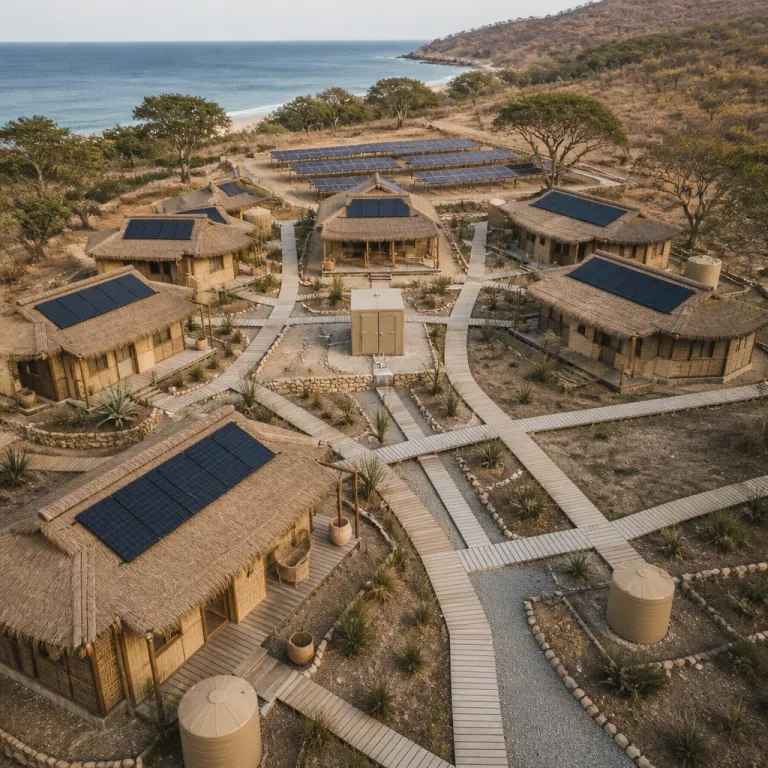
The most interesting accommodation TimorLeste stories are not in boardrooms but on the water. On Ataúro Island and the quieter beaches east of Dili, eco‑focused properties turned Timor-Leste’s unreliable grid into a reason to invest early in solar, rainwater harvesting, and waste systems, long before sustainability became a marketing line. These lodges built their stay experience around natural breezes, shaded verandas, and outdoor swimming areas rather than energy‑hungry spas.
At coastal eco lodges on Ataúro, for example, solar panels and batteries typically run essential services so that every guest can count on lighting, fans, and charging even when the mainland grid fails. Rainwater tanks, local materials, and careful orientation mean each room stays surprisingly cool, with beds positioned to catch cross ventilation instead of relying entirely on air conditioning. The swimming pool, when present, is often a saltwater or low‑chemical design that uses efficient pumps, while the restaurant bar leans on fresh fish and local produce rather than power‑intensive imports.
These coastal properties usually sit right on the beach, so the line between pool, swimming, and reef is thin. Many offer a relaxed bar‑restaurant concept where you can walk from your table straight into the sea, then return to a good espresso made on a modest solar‑powered machine. For a deeper sense of how seasons, currents, and visibility shape such a stay, local dive operators and accommodation in Timor-Leste guides publish monthly notes on which walls to book first and how to time your nights on Ataúro for both comfort and coral.
Dili’s premium hotels: where diesel, solar, and design intersect
In Dili Timor, the premium end of accommodation TimorLeste looks different from the barefoot eco lodges of Ataúro. Here, the expectation from an executive guest is clear: a Dili hotel should provide consistent air conditioning, hot water on demand, and a quiet room even when the city grid stutters. To deliver that, many properties still lean heavily on diesel generators, layering solar on top for public area lighting or back‑office loads rather than full guest comfort.
Take a central hotel Dili property located in the heart of the waterfront strip, within a short drive of Nicolau Lobato International Airport. A typical plaza‑style hotel in this area offers private parking, a compact swimming pool, and a restaurant bar that doubles as a meeting spot for the city’s business community, while running a hybrid of grid and generator power behind the scenes. Some newer conversions, highlighted in local Dili hotel case studies, are experimenting with rooftop solar to shave diesel use, but still keep generators ready for peak air conditioning demand and elevator loads.
For the traveler, the question is not whether a hotel uses diesel, but how transparently it manages the balance. Ask whether the hotel apartment wing or long‑stay units have separate metering or efficiency measures, and whether the pool filtration and bar‑restaurant refrigeration are on the same backup system as your room. In a city where the grid can drop without warning, the best accommodation in Timor-Leste treats energy as a design problem, not just an operational headache.
What the grid gap means for your room, Wi Fi, and hot water
Power reliability in Timor-Leste is improving, but any honest guide to accommodation TimorLeste will tell you to plan for occasional interruptions. The national grid still experiences voltage swings and short outages, which is why large institutions in Dili have invested in substantial solar and battery systems to secure their own operations. That same logic now shapes how serious hotels, guest houses, and beach properties think about your stay.
For a business‑leisure guest, the practical questions are simple but crucial. Can you charge a laptop, run air conditioning, and enjoy hot water after a late flight into Nicolau Lobato Airport, even if the grid fails for an hour? Does the hotel Dili property have battery backup for Wi‑Fi routers, or will your video calls drop the moment the lights flicker in Timor-Leste’s capital? In many solar‑forward lodges, fans and lighting are prioritized on batteries, while heavy loads like a large swimming pool pump or full corridor air conditioning may pause during longer outages.
Room design does a surprising amount of heavy lifting here. Properties that orient rooms toward sea breezes, use deep verandas, and specify high ceilings often keep beds comfortable with just a fan, even on humid nights. When you evaluate accommodation in Timor-Leste listings, look for mentions of natural ventilation, shaded outdoor swimming areas, and efficient air conditioning units rather than just the words “free Wi‑Fi” or “good pool”; these details tell you how well the property has translated Timor-Leste’s grid reality into a resilient guest experience.
Reading the sustainability claims behind solar and diesel
The marketing language around accommodation TimorLeste has evolved quickly as sustainability became a selling point. Many hotels and guest houses now highlight solar panels, a swimming pool with ocean views, or a beach restaurant bar as proof of eco credentials, but the real test lies in how much diesel still runs behind the scenes. Grid unreliability forced properties to invest in backup power, and only some chose to make that backup genuinely green.
On Ataúro and along the coast toward Cristo Rei, several lodges operate almost entirely off‑grid, using solar arrays, batteries, and careful water management to keep every room functional with minimal generator use. In Dili Timor, by contrast, a central beach hotel or plaza‑style property often uses solar for corridor lighting while diesel covers air conditioning, elevators, and the pool system, which means the carbon footprint per night can still be high. When you compare rate tables, remember that a slightly higher price at a truly solar‑powered guest house may reflect the cost of batteries and maintenance rather than just a premium brand position.
The national conversation is shifting as well. Projects supported by UN Timor-Leste and government partners have used solar to address grid unreliability and promote sustainability in key public buildings. This kind of large‑scale example, combined with planned investment in power distribution and renewables, suggests that future accommodation in Timor-Leste will have an easier time going genuinely green, but for now, the onus is on the informed guest to ask precise questions about generators, solar coverage, and what stays on when the grid goes off.
FAQ
How reliable is electricity in Dili hotels and coastal lodges?
Electricity in Dili and wider Timor-Leste is more stable than it once was, but short outages and voltage drops still occur. Premium hotels in Dili Timor usually have diesel generators, while many coastal eco lodges rely on solar and batteries for essential loads. When booking accommodation in Timor-Leste, ask whether your room, Wi‑Fi, and hot water are covered by backup systems.
Can I expect full air conditioning in solar powered properties?
Most genuinely solar‑powered lodges in Timor-Leste prioritize fans, lighting, and device charging over full air conditioning in every room. They use design features such as cross ventilation, shaded verandas, and high ceilings to keep beds comfortable without heavy cooling. In Dili hotel properties, full air conditioning is common, but often supported by diesel rather than solar.
What should business travelers pack to handle the grid gap?
Executives booking accommodation in Timor-Leste should bring a small power bank, a multi‑plug adapter, and, if presentations matter, an offline copy of key files. Solar chargers can be useful in remote beach hotel locations, though many guest houses now provide at least one reliable charging point per room. Planning critical calls for daylight hours reduces the impact of any unexpected outage.
Are solar claims from hotels in Timor Leste trustworthy?
Some properties in Timor-Leste are fully committed to solar, running most guest services from panels and batteries, while others use a small array mainly for marketing. Ask what percentage of total power comes from solar, and whether generators still run for the swimming pool, kitchen, and air conditioning. Transparent answers are a good sign that the accommodation type takes sustainability seriously.
Will future infrastructure investments change the hotel experience?
Planned investment in power distribution and renewable energy should gradually reduce outages and make it easier for hotels to rely less on diesel. As the grid strengthens, more Dili hotel and coastal properties will be able to expand solar systems without carrying all the risk themselves. For guests, that should mean quieter nights, more stable Wi‑Fi, and a clearer link between sustainability claims and actual practice in accommodation TimorLeste.
Sample accommodation and backup power comparison
The table below illustrates how different types of accommodation in Timor-Leste typically handle backup power and comfort. Use it as a quick reference when comparing stays.
| Property type | Typical location | Backup system | Cooling approach | Best for |
|---|---|---|---|---|
| Premium business hotel | Central Dili Timor | Grid plus large diesel generator | Full air conditioning in rooms and corridors | Executives needing predictable comfort |
| Eco beach lodge | Ataúro Island / east of Dili | Solar with battery, small backup generator | Fans, cross ventilation, shaded verandas | Guests prioritizing sustainability and quiet |
| Serviced apartment hotel | Near Nicolau Lobato Airport | Grid plus medium generator, limited solar | Mixed: air conditioning in bedrooms, fans elsewhere | Long‑stay travelers and project teams |