Why accommodation in Timor-Leste feels different from the rest of Southeast Asia
Accommodation in Timor-Leste sits at a rare intersection of raw nature and community ownership. Travelers weighing where to stay in Timor-Leste quickly notice that the most interesting places are not always the polished hotel in Dili but the village guesthouse on a headland above the sea. This is a country where research by Conservation International and partners suggests that roughly one third of the world’s whale and dolphin species pass close to shore1, and where your choice of lodging can directly fund the people who still fish these waters in wooden boats.
In Dili, the capital stretches along a long beach, with a mix of simple guesthouse properties, mid-range Dili hotel addresses and a handful of higher-end options such as Plaza Hotel Dili that offer air conditioning, a shaded swimming pool and reliable private parking. Yet even here, the most interesting stays are often in smaller Timor-Leste guesthouses located in quiet side streets, where a family runs four rooms with good beds and a bar-restaurant serving grilled fish caught that morning. A short drive from Nicolau Lobato International Airport, you can move from airport tarmac to a room with a view of the bay in under thirty minutes, and that proximity makes Dili a natural first-night base before heading out to the villages.
Across Timor-Leste, the government and partners such as non-governmental organizations have encouraged a community guesthouse model that keeps ownership in local hands and channels guest spending into village projects. This approach grew partly in response to declining rural incomes, and it now underpins much of the most interesting accommodation outside Dili, from the southern coast to the eastern districts. For travelers, that means the choice is no longer just between a conventional beach hotel and a city hotel apartment; it is between a stay that feels like any other in Southeast Asia and a stay where your host can point to the new water tank or school roof your night has helped fund.
How the community guesthouse model works in practice
The community guesthouse model in Timor-Leste is deceptively simple, yet the mechanics matter if you care where your money goes. Local villagers collectively own the guesthouse building, often constructed with traditional techniques and local materials, while a rotating team of hosts manages bookings, meals and guest activities. Prices are usually set in consultation with partners such as Conservation International and local government, balancing fair income for the village with good value for the guest who might otherwise book a standard hotel stay in Dili.
Revenue distribution is transparent in the better-run properties, with a clear split between wages for the host family, a village fund and maintenance of the accommodation. In some eastern communities, a fixed percentage from every night goes into a Tara Bandu fund, supporting customary marine protection rules that restrict fishing in certain zones and keep the nearby swimming reefs healthy. A typical example might see 40% of income go to staff wages, 30% to a community account and 30% to repairs, with the village fund then paying for projects such as a gravity-fed water system or solar lighting for the school. When you compare this to a conventional Dili hotel or a plaza-style property near Nicolau Lobato Airport, where most revenue leaves the country, the contrast in local impact is stark and measurable.
For travelers planning where to sleep in Timor-Leste, the model offers a spectrum of comfort levels, from very basic guesthouse rooms with shared bathrooms to upgraded community lodges that feel closer to a small serviced apartment. Some villages now experiment with a compact apartment-style layout, adding two or three self-contained units with private bathrooms, air conditioning and even a small plunge pool, while keeping the communal dining area and shared activities. If you want to understand how this infrastructure will scale, it is worth reading about the planned runway extension at Dili’s airport in this analysis of the access window everyone is missing, because more flights will inevitably push demand for every form of accommodation, from city hotel to remote guesthouse.
What a night in a Timor-Leste community guesthouse actually feels like
A stay in a Timor-Leste community guesthouse begins long before you see your room. The drive from Dili to the eastern districts or the southern coast usually winds past coffee groves, small roadside markets and schoolyards, and by the time you arrive, the village has often gathered to greet the new guest. Check-in is informal, with a handwritten ledger rather than a front desk terminal, but the welcome is warm and the sense of being a temporary part of the community is immediate.
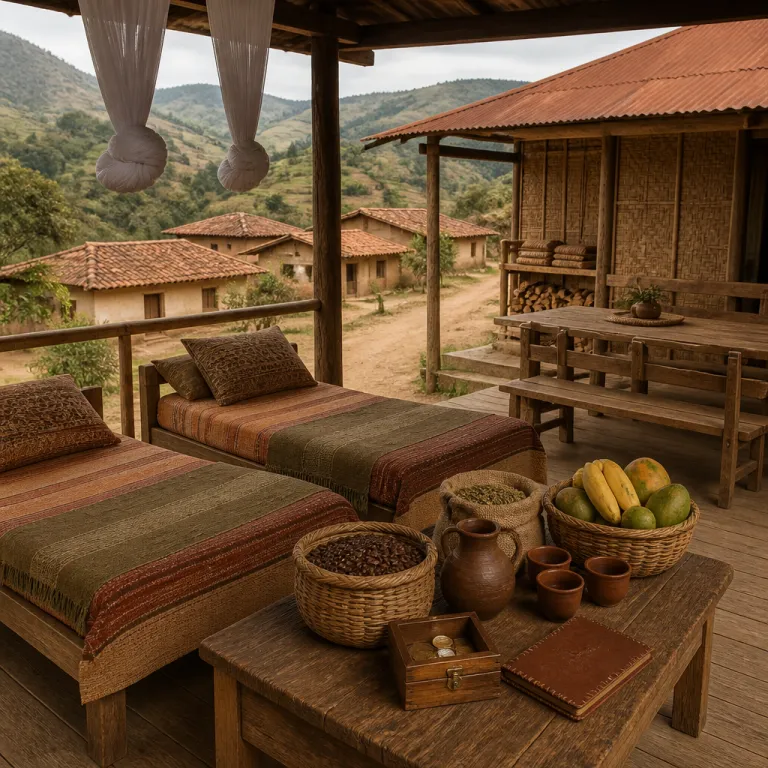
Rooms in these locally owned properties are simple but increasingly well considered, with mosquito nets, firm beds and shutters that catch the sea breeze or, in hotter valleys, ceiling fans and basic air conditioning. Some upgraded community lodges now offer a small outdoor swimming area or even a compact swimming pool fed by spring water, though you are more likely to swim in the sea or a nearby river than in a tiled pool. Bathrooms range from shared facilities with bucket showers to private wet rooms, and while you will not find the polished finish of a beach hotel in Bali, you will find a level of cleanliness and care that often exceeds expectations.
Meals are the heart of the experience, taken at a long table where hosts and guests sit together, and where the bar-restaurant concept is replaced by something more intimate and seasonal. Fish, rice, wild greens and local coffee dominate the menu, and dietary preferences are handled with quiet competence rather than a printed list of options. Typical nightly rates for a village stay, including two or three meals, often fall in the range of a budget Dili hotel room without food, with many rural guesthouses charging around US$25–40 per person per night. Bookings are usually handled by email, messaging apps or through a local tour operator rather than an automated engine. For a deeper breakdown of what to expect in terms of pricing, comfort and activities on Atauro Island, the country’s flagship eco destination, the guide to eco lodges, what to pay and what to expect is essential reading before you lock in your Timor-Leste accommodation plans.
From Dili’s waterfront to Atauro Island reefs: where the model is working best
The most visible expression of community-based accommodation in Timor-Leste is on Atauro Island, a short boat ride north of Dili across the deep Ombai Strait. Here, a string of small guesthouse properties and eco lodges lines the coast, each with its own patch of coral reef and its own approach to community governance, but all broadly aligned around the idea that visitor fees should support both livelihoods and reef conservation. Conservation International has helped shape this framework, leveraging the island’s status as one of the most biodiverse marine environments on the planet to justify strict Tara Bandu fishing closures and careful visitor management.
On Atauro, you can sleep in a simple guesthouse a few metres from the beach, wake to the sound of waves and then walk straight into the sea where the reef starts at your doorstep. Some properties now offer a modest swimming pool or plunge pool for guests who prefer freshwater, but the real swimming happens over coral heads where the dive master has named every bommie and can point out individual turtles. For a curated list of three properties where this reef-at-your-door experience is most intense, the guide to places where the reef starts at your doorstep is a sharp filter for anyone planning high-impact stays in Timor-Leste.
Beyond Atauro, the model is spreading along the eastern and southern coasts of Timor-Leste, where new guesthouse projects sit near surf breaks, whale migration routes and quiet agricultural valleys. In these regions, you will still find the occasional conventional beach hotel or a Dili hotel brand experimenting with a serviced apartment-style annex, but the most interesting stays are often in villages that have set aside land for a small cluster of rooms and a shared kitchen. Whether you are watching sunrise from the Cristo Rei headland above Dili, or driving east toward the less visited districts, the pattern is the same; the closer you get to community-owned accommodation, the more your stay feels anchored in place rather than in a generic resort template.
Comparing community guesthouses with conventional hotels in Dili
For many travelers, the first decision in planning accommodation in Timor-Leste is whether to book a conventional hotel in Dili or to head straight for a community guesthouse. City hotels such as Plaza Hotel Dili or other established Dili hotel addresses near the waterfront offer familiar comforts, including air conditioning, a reliable swimming pool, secure parking and quick access to embassies and offices. These properties suit a late arrival at Nicolau Lobato International Airport or a short business stay, and they provide a predictable base before or after more adventurous nights in the countryside.
By contrast, a community guesthouse in a coastal village or on Atauro Island trades some of that predictability for immersion and impact. You might have a fan instead of full air conditioning, a mosquito net instead of blackout curtains, and a sandy path instead of paved private parking, but you also gain direct contact with hosts whose livelihoods depend on your stay. In pure comfort terms, a top Dili hotel or a well-managed hotel apartment in the capital will usually win, yet in terms of experience and the sense that your dollar reaches the village, the guesthouse model is hard to beat.
Value is where the comparison becomes most interesting for the solo explorer who is the core audience for Timor-Leste guesthouses. A night in a mid-range Dili hotel with a pool, bar-restaurant and airport transfer can cost US$70–120, roughly the same as two or three nights in a village guesthouse that includes meals, guided walks and sometimes even a boat trip. When you factor in that community-based nature tourism here leverages pristine, remote, biodiverse coral reefs and one third of the world’s whale and dolphin species documented in national waters, the equation shifts further toward the village, especially for travelers who measure luxury not only in thread count but in access and meaning.
Practical tips for choosing where your money sleeps
Choosing accommodation in Timor-Leste starts with being honest about your comfort thresholds and your reasons for coming. If you need a guaranteed hot shower, strong air conditioning and twenty-four-hour reception, then a Dili hotel or a plaza-style property near the waterfront is the logical first step. You can still route part of your trip through community guesthouses later, using the city as a staging point and taking advantage of secure parking, easy access to the airport and the chance to visit Cristo Rei or the waterfront cafés between journeys.
If your priority is to ensure that your stay supports local livelihoods and reef conservation, then aim to spend as many nights as possible in community-owned accommodation, especially on Atauro Island and in the eastern districts of Timor-Leste. Look for clear information on how revenue is shared, whether the property participates in Tara Bandu marine protection, and how it manages water, waste and energy, because these details separate serious projects from places using sustainability as a label. Remember that community-based tourism worldwide has shown that “A lodging operated by local residents, offering cultural experiences.” and “It provides income and promotes cultural exchange.” and “Many use sustainable practices and local materials.” — statements that apply with particular force in Timor-Leste, where rural incomes have long lagged behind the capital.
Finally, think in terms of a portfolio of stays rather than a single accommodation type, combining a first or last night in a hotel apartment in Dili with several nights in a village guesthouse or beach-hotel-style lodge. This mix lets you enjoy the convenience of being located near the city for logistics, while still spending most of your time in places where your presence is felt and appreciated. In a country where community involvement, local resource utilization and a rising demand for authentic experiences are reshaping the hospitality landscape, where you sleep is no longer a neutral choice; it is one of the most powerful decisions you make as a traveler, and the next step is simply to choose which village, reef or valley you want your stay to support.
FAQ
What is a community guesthouse in Timor-Leste ?
A community guesthouse in Timor-Leste is a small-scale accommodation owned and operated by local residents, usually at village level. Guests stay in simple rooms, share meals with hosts and often join guided walks, boat trips or cultural activities organized by the community. The model is designed so that a significant share of each night’s payment goes directly to village funds, wages and maintenance, rather than to external investors.
How does staying in a community guesthouse benefit local people ?
Staying in a community guesthouse channels money into rural areas where formal employment is limited and agricultural incomes are volatile. Revenue from tourism in Timor-Leste is typically split between host families, a communal development fund and operational costs, which means your stay can help finance water systems, school repairs or reef monitoring. This structure also encourages younger villagers to remain in their communities, working as guides, cooks or managers instead of migrating to Dili in search of work.
Are community guesthouses in Timor-Leste eco friendly ?
Many community guesthouses in Timor-Leste use local materials, passive cooling and low-impact waste systems, which reduces their environmental footprint compared with larger hotels. On Atauro Island and in some eastern coastal villages, guesthouse operators participate in Tara Bandu marine protection, limiting fishing and anchoring to safeguard coral reefs and marine life. While standards vary, the best projects integrate conservation, cultural preservation and hospitality in a single framework.
How do community guesthouses compare with hotels in Dili on comfort ?
Hotels in Dili, including Plaza Hotel Dili and other established Dili hotel properties, generally offer higher comfort levels, with full air conditioning, en suite bathrooms, reliable hot water and sometimes a swimming pool. Community guesthouses range from very basic rooms with shared facilities to upgraded lodges with private bathrooms and fans, but they rarely match the polish of a city hotel apartment. Travelers who value immersion, local interaction and direct impact often accept this trade-off, using Dili hotels mainly for transit nights around flights at Nicolau Lobato International Airport.
Where are the best areas to try the community guesthouse model in Timor-Leste ?
The strongest concentration of community guesthouses is on Atauro Island, where eco lodges and village stays sit close to world-class coral reefs and whale migration routes. Eastern districts of Timor-Leste and parts of the southern coast also host emerging projects, often near surf breaks, hiking trails or culturally significant villages. Many travelers structure their Timor-Leste itinerary around a loop that starts in Dili, continues to Atauro, then heads east or south before returning to the capital for a final night.
1. Species estimate based on surveys by Conservation International and partners in the Ombai-Wetar Strait and surrounding waters.